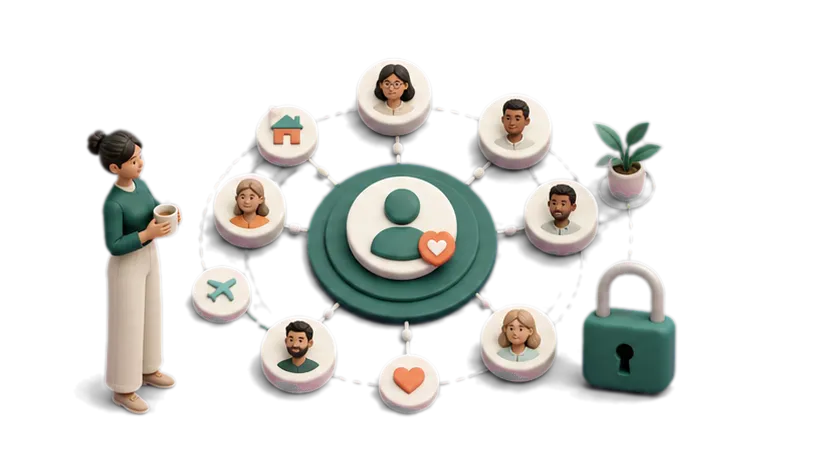
A friend moves cities. A former colleague you liked working with drifts out of touch. A relative you meant to call back in the spring is still on your list in November. None of that happens because you stopped caring. It happens because memory alone is not a system, and most of us are relying on memory alone.
What CRM for Personal Life Actually Means
It's Not About Selling Anyone Anything
Using a CRM for your personal relationships does not mean treating friends like leads. It means giving yourself a place to note what is going on in someone's life, so the next conversation picks up where the last one left off instead of starting from scratch.
It's About Remembering What Actually Matters
Most people do not forget the big things, a wedding, a new job, a health scare. What slips is the smaller detail: the name of someone's kid, the fact they were nervous about a specific interview, the trip they were planning. Those small details are what make someone feel remembered, and they are exactly what a memory under pressure drops first.
Signs Your Personal Relationships Need a System
- You realize it has been eight months since you last spoke to someone you genuinely like
- You have to scroll through old texts before a call to remember what you last discussed
- You've double booked or forgotten a birthday more than once this year
- You keep meaning to reconnect with someone and it keeps not happening
What to Look for in a Personal Life CRM
Simple Enough to Actually Use
If a tool takes twenty minutes to log one conversation, you will stop using it within a week. The right tool for personal relationships should take less effort than the texting you are already doing.
Reminders That Feel Timely, Not Naggy
A good reminder shows up at a moment that makes sense, not as a generic nudge every Sunday regardless of what is actually going on with that person.
Somewhere for Context, Not Just Contact Info
A phone number and an address are not the point. What you actually need saved is the context: what they are going through right now, what you last promised to follow up on, what you know they would want to hear about.
How Weaverly Approaches This
Weaverly was not built exclusively for sales professionals or for pure business networking. It works for the version of your network that includes old friends, former classmates, and people you genuinely like but keep losing touch with. It keeps the context that matters and prompts you before too much time has passed, rather than after.
Frequently Asked Questions
What's the difference between a personal CRM and my phone's contacts app?
Your phone stores a name and a number. A personal CRM stores the relationship: notes on your last conversation, reminders to follow up, and context you would otherwise forget.
Do I need a CRM if I only have a small circle of friends?
If your circle is small and you already stay in close touch without effort, you may not need one. Most people underestimate how many relationships they are actually trying to maintain once family, old friends, and extended contacts are counted together.
Is it weird to use a CRM for friendships?
Not in practice. Most people who try it find it feels less like tracking friends and more like giving themselves permission to remember things they actually wanted to remember anyway.
Can I use a personal CRM for family relationships too?
Yes. Many people use the same system for family, old friends, and professional contacts, since the underlying problem, staying in touch consistently, is the same across all of them.
How much time does it take to maintain a personal CRM?
A few minutes after a conversation to jot a quick note is usually enough. The tools that require more than that tend to get abandoned.
What's the cheapest way to start managing personal relationships?
A simple spreadsheet costs nothing and works for a small number of people. It becomes harder to maintain as your network grows, which is usually when people move to a dedicated tool.
Should I use the same tool for personal and professional contacts?
Many people do, since the habit of checking in and taking notes is the same either way. Others prefer to keep the two separate. Either approach works as long as you actually use it.
Will a CRM make my relationships feel less genuine?
Used well, it does the opposite. Remembering someone's situation and following up at the right time is what genuine attentiveness looks like. The tool just removes the risk of forgetting.
What happens if I stop using it for a while?
Nothing breaks. Your existing notes and contacts stay exactly as you left them, and you can pick back up whenever you want without losing what you already recorded.
Is Weaverly good for personal relationships or just professional ones?
Both. Weaverly was built around the idea that your network, personal and professional, is one interconnected thing, not two separate lists that need separate tools.
Related reading
- The Best Personal CRM Apps in 2026: An Honest Comparison
- How to Activate Your Professional Network (Before It Goes Cold)
- What is Network Relationship Management? A new way to activate the contacts you already have.
- The Best Contact Management Software in 2026: A Complete Guide